Visiting Chora Church (Kariye Mosque) in Istanbul: Everything You Need to Know
Hurray transparency! This post contains affiliate links. For more information see our disclosure.
Were I asked to make a list of the most underrated attractions in Istanbul, I can honestly say that the Chora Church (now known as Kariye mosque) would sit firmly at the top of that list.
With its long history, spectacular mosaics and vibrant, detailed frescoes, the Chora Church deserves to be listed right alongside the Hagia Sophia and Blue Mosque as one of the must-see sites in Istanbul, but sadly, it is often overlooked.
Or perhaps, not so sadly…
Whilst we definitely think that Chora deserves to be more well known, what this relative lack of profile means is that, for the moment at least, a visit to Chora really does feel like you're discovering something secret and special that most tourists will miss.
Plan Your Visit to Chora Church
🙋 Best Chora Church tours
- Kariye Mosque Private Walking Tour (our top pick!)
- Galata Tower, Chora Church & Balat Tour (fantastic 4-hour tour)
- Balat, Chora & Tekfur Palace Hidden Gems Tour (discover Istanbul's hidden heritage)
🕌 Hagia Sophia tickets
Istanbul's most popular Byzantine church - skip the queues & get your ticket in advance.🚇 Public transport card
🏠 Where to stay in Istanbul:
- NOA - Ali Hoca 6 (where we've stayed)
- Hagia Sofia Mansions Istanbul (luxury choice)
- Le Banc (fab budget option)
🌟 Don't forget:
- Find your way to Chora Church & stay connected with an Airalo eSIM!
Speaking of missing tourists, another attractive point about Chora is the relative lack of crowds and particularly the large annoying tour groups that you can sometimes find at other attractions.
Their absence for the majority of the time allows Chora to retain the serene, calm atmosphere that you sometimes pine for at other sites outside of prayer time.
It also means that you won't feel rushed and can spend as long as you like exploring what is a truly fascinating building.
In this article we’ll tell you everything you need to know to visit this hidden gem, from location and transport options to etiquette and entry rules.
Importantly, we’ll also share some lesser-known facts about the site and highlight obscure, curious and often missed details that you won't find discussed in many other guides. Why? Well, because that’s just how we roll, innit.
What is the Chora Church?
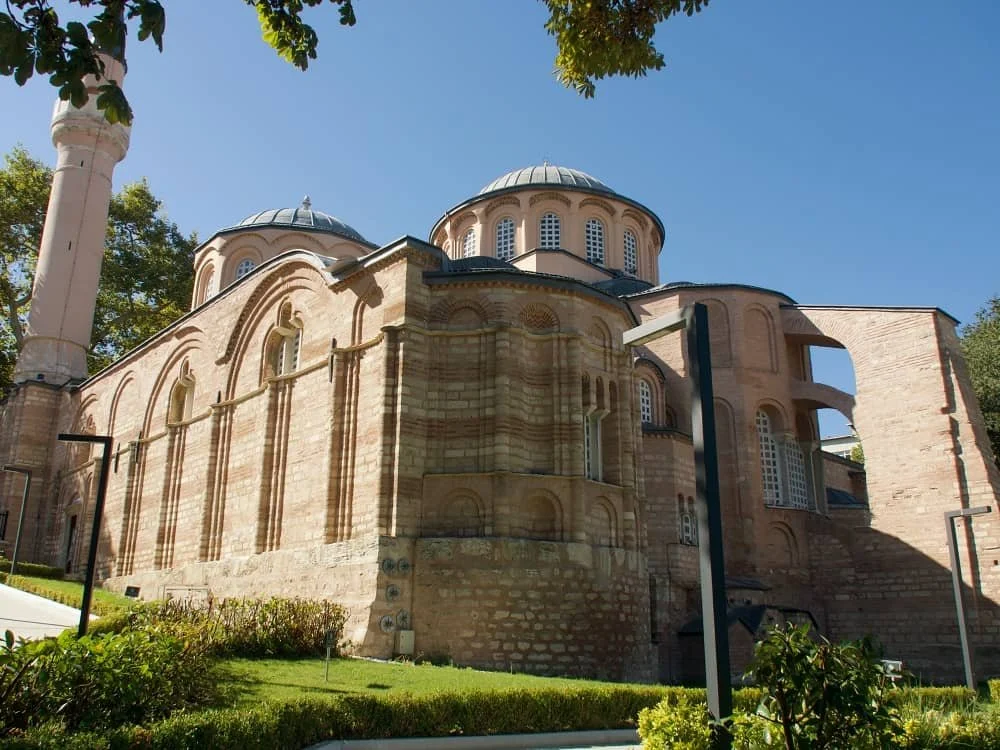
The incredible Chora Church
Like many of the older religious buildings in Türkiye and the surrounding regions, the Chora Church aka Kariye Mosque has undergone a number of physical and theological transformations over the years.
Having previously been the site of a necropolis, a monastery and a richly decorated Byzantine church, the building was later converted into a mosque in 1511 after the conquering of Constantinople by the Ottomans in 1453; then a secular museum which opened to the public in 1958; and then back to a mosque again. Its current status was settled by Presidential Decree in 2020.
The word Chora actually means ‘outside’ ‘in the countryside’ or ‘in the fields’ and the name was originally a reference to the fact that the building was situated outside of the city walls.
Chora Church was closed for four years for restorations and only reopened in May of 2024. Between us, we think this is one of the reasons why the place currently gets less visitors than it should.
Being closed for such a long time meant that the Chora Church had a dip in visibility, the result being that some folks we have spoken to have either never heard of the place, or assumed it was still closed or difficult to visit.
Spoiler alert: it isn’t.
Why You Should Add a Tour of Chora Church to Your Istanbul Itinerary
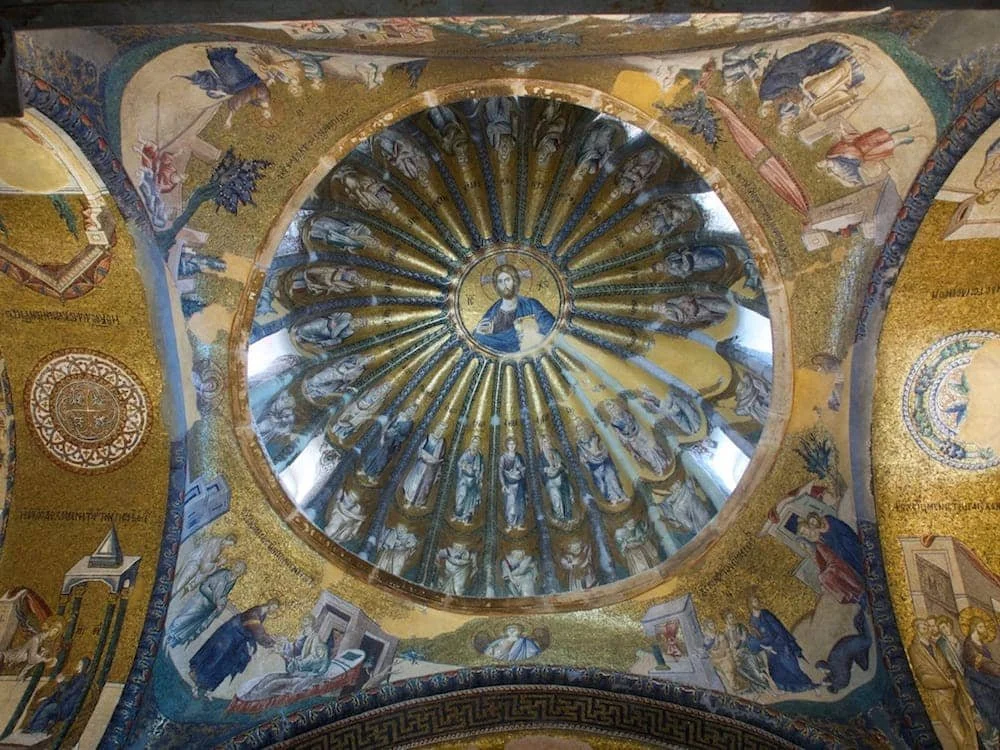
Mosaic in the southern dome of the inner narthex of Jesus Christ surrounded by portraits of his ancestors
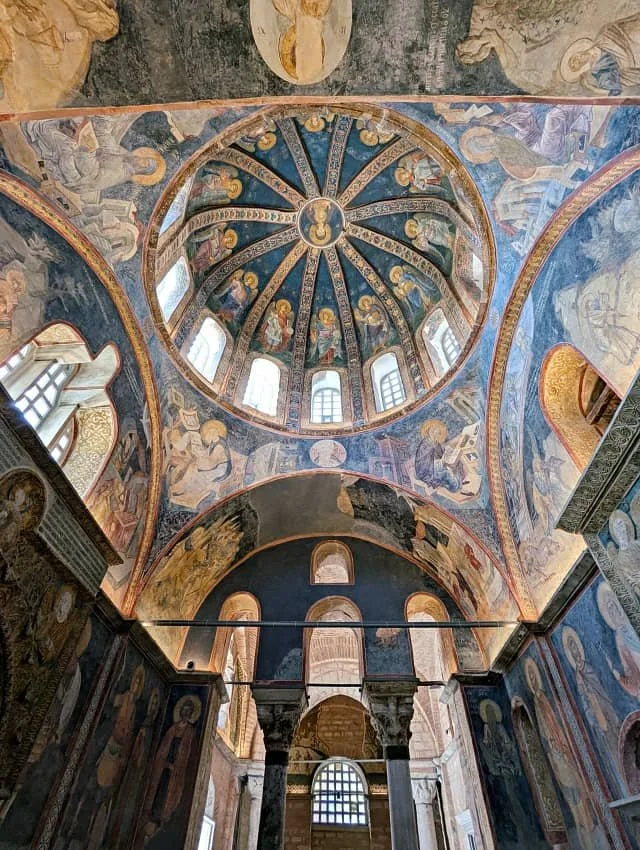
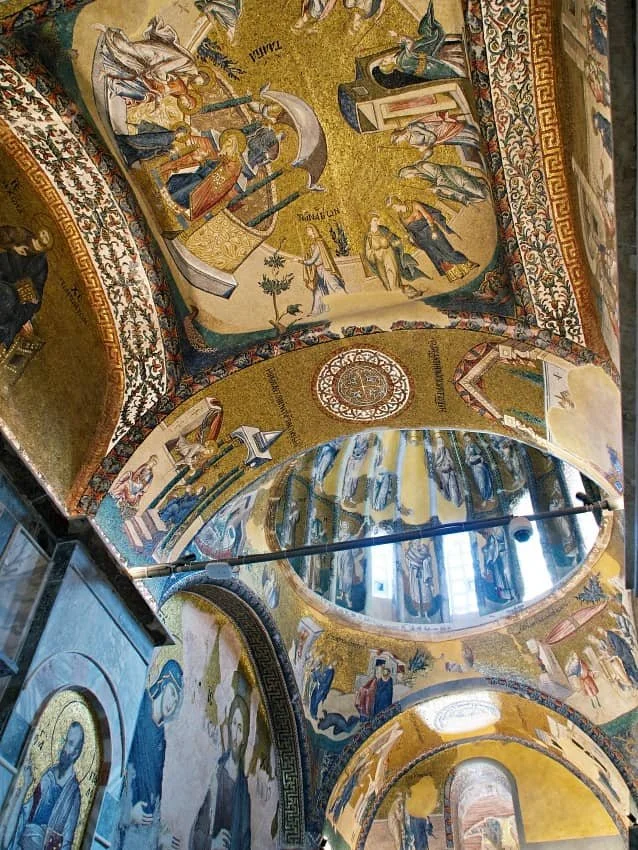
The main attractions of the site aside from its historical significance and architectural grandeur are the stunning and brilliantly preserved mosaics and frescoes. Just so you know, we are not talking about one or two here.
Unlike at some sites where you might get to see only a handful of well preserved pieces, Chora is literally covered with them and they are very well preserved.
Perhaps ironically, it was the Muslim prescription against depictions of humans in a mosque and the accompanying demand that they be covered over, that helped keep them in such good nick.
The artworks were concealed from view behind wooden shutters or layers of plaster and whitewash. Measures that not only prevented people from seeing the works, but also shielded them from the effects of weathering and vandalism that have impacted many similar sites.
The frescoes and mosaics depict religious stories and scenes that are both Biblical and apocryphal in origin (more on that later).
These detailed pieces cover the ceilings, walls and seemingly every alcove, nook and crannie of the building’s interior. Honestly they are so numerous that after a while you're scared to stand still in case people assume you're also a fresco and start photographing you.
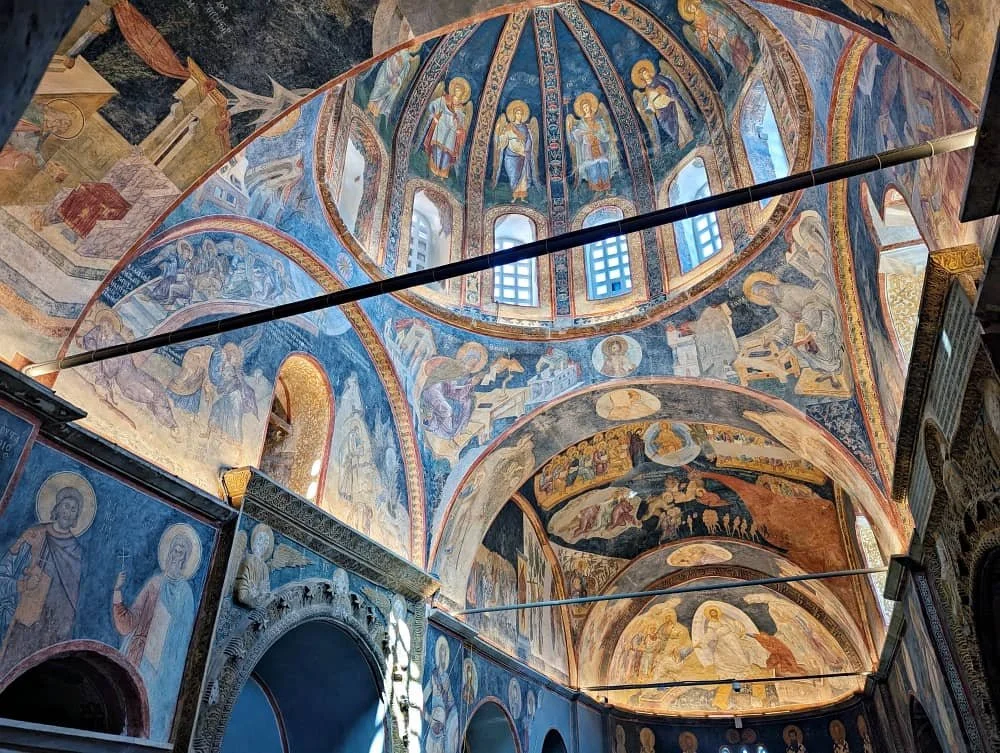
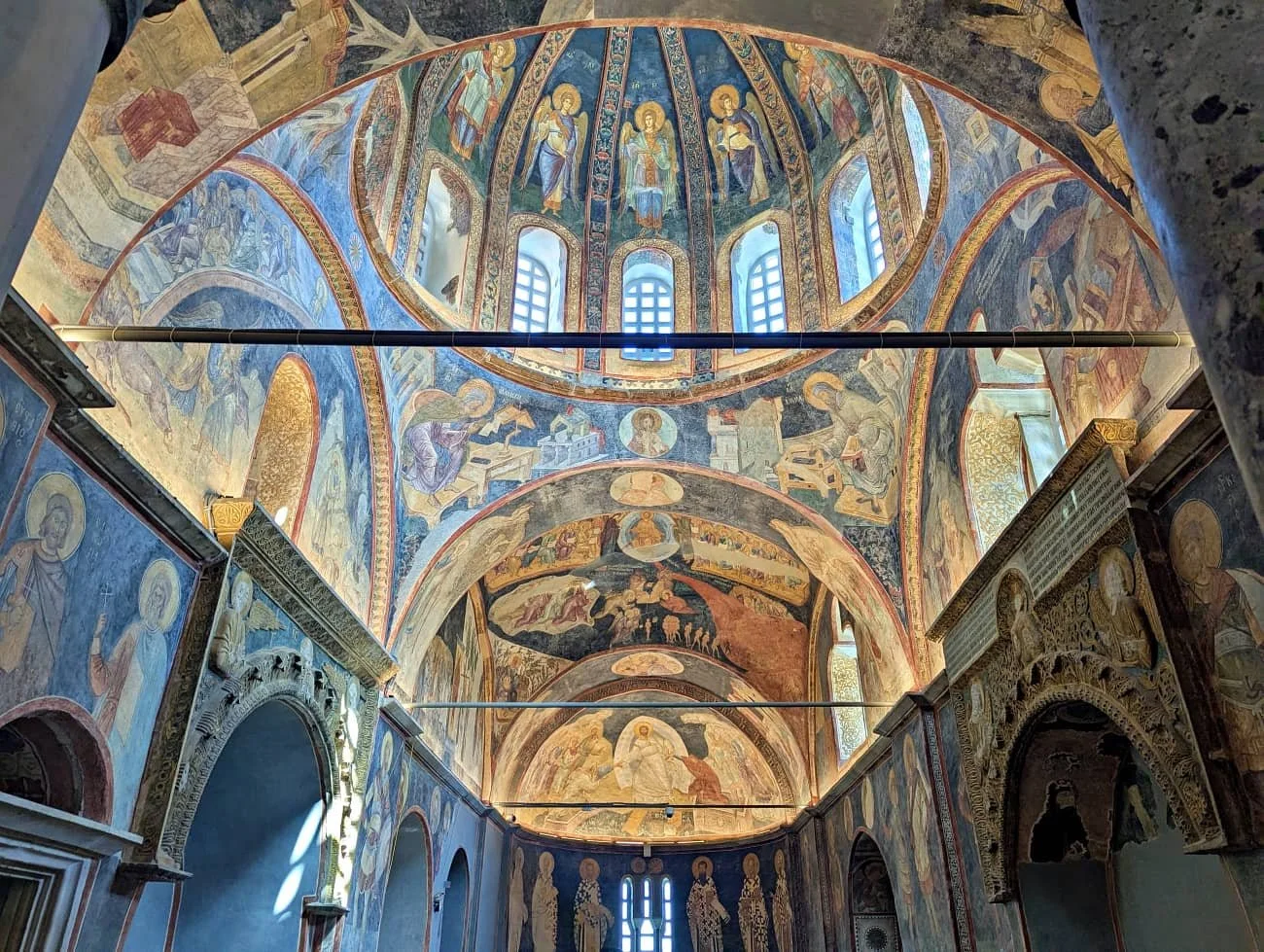
Gorgeous frescoes in the funerary side chapel of the Chora Church
Funnily enough, despite the sites comparatively low profile in recent years, if you’ve ever so much as glanced at a guide to Istanbul, seen a leaflet on the city's history or browsed through souvenir fridge magnets (the true traveller’s choice of souvenir) these images will seem strangely familiar.
It's an odd paradox that whilst Chora might be less visited than some of the more famous sites, the images themselves are often reproduced. Of course there is a reason for that, namely because they're bloody stunning.
Aside from just being gorgeous explosions of colour, displays of talent and objects of religious and historical significance, these artworks also represent an important milestone in the development of art. Strap in for some technical sounding detail...
The works at Chora are some of the best known examples of paleologan art, whilst the handling of depth, depiction of movement and inclusion of more grounded, human narratives in the pieces make them highly important in late Byzantine art as key precursors to the sensibilities of the Renaissance.
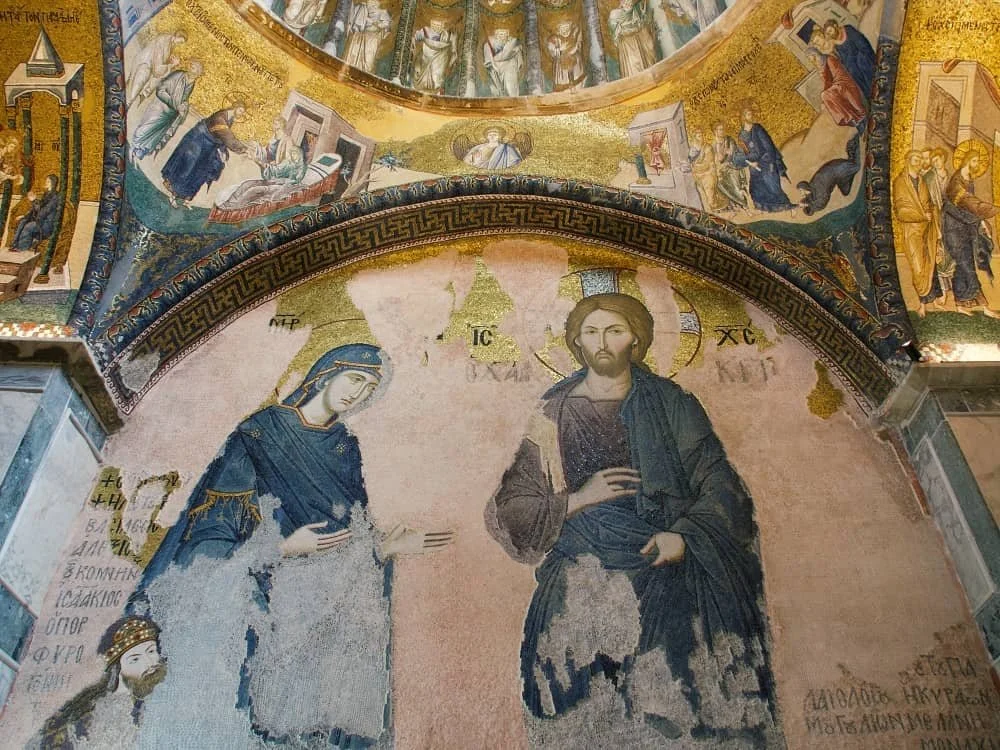
The Deesis mosaic of Jesus Christ and the Virgin Mary alongside two monastic patrons in the inner narthex of the Chora Church
Phew. Too much of a word salad?
What I am trying to say is that the artwork at Chora shows how Byzantine artists were moving away from the traditionally flat, formal style of religious art to something that looked more natural and human.
The figures in the frescoes aren’t just standing still - they are walking, interacting with others or gesturing.
The images depict Biblical stories in a way that feels more like events involving real people. And some of the artistic developments seen at Chora - particularly this ‘humanness’ - anticipated ideas that would become prominent in Renaissance art.
If you’re thinking ‘this stuff is way over my head’ let me tell you: you do not have to be an art buff, historian or in any way religious to appreciate the site.
Whether you're well on your way to becoming the next Mary Beard or you thought that a paleologan was one of those weird armadillo-looking things you saw on a nature documentary once, Chora remains a stunning spectacle and a wonderfully atmospheric place that should be high on your list of places to visit in Istanbul.
Best Guided Tours of Chora Church
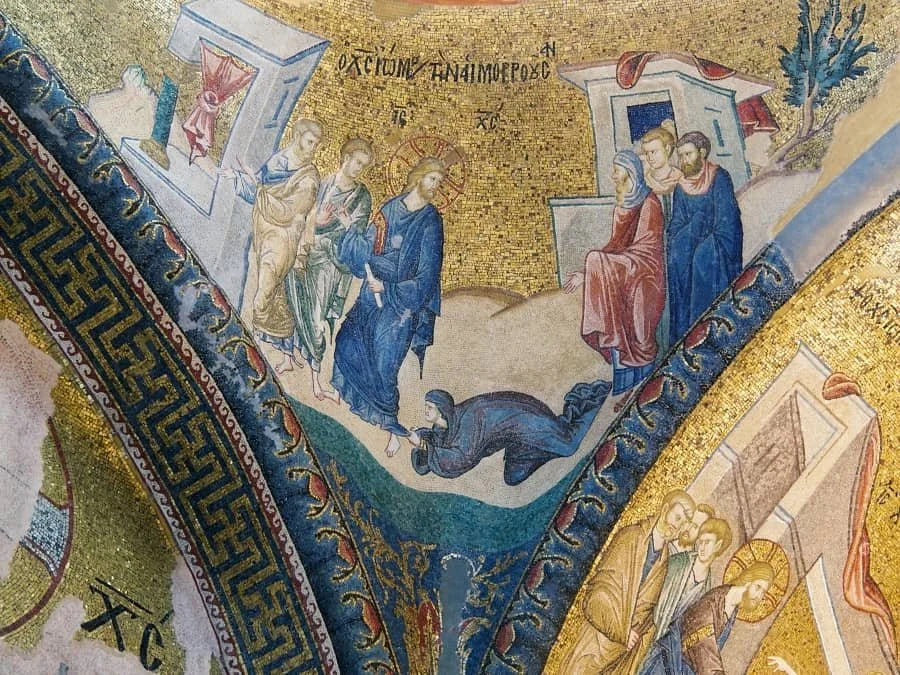
Mosaic of Jesus Christ healing the Woman With the Issue of Blood
To really appreciate Chora, it's definitely worth considering a guided tour. An expert guide can explain the stories behind the mosaics and frescoes, point out details you might otherwise walk straight past and help bring the building's fascinating history to life.
You'll come away with a much better understanding of what you're looking at, rather than simply admiring the artwork.
Here are our favourites tours:
Kariye Mosque Private Walking Tour
If you’d like to visit the site in the company of an expert guide who can talk you through the history, meaning and significance of the various artworks at Chora Church, then this Kariye Mosque private walking tour is for you.
You’ll meet your guide at the super cute coffeehouse opposite the Chora Church/Kariye Mosque. You’ll then get a 1.5 hour tour of the building, with your guide giving you a detailed explanation of all the mosaics, frescoes and architectural details.
Galata Tower, Chora Church and Balat Tour
If you’d rather make more of a day of it and include several other must-see sights in your wanderings, then this 4-hour guided tour which covers a fantastic combination of attractions, might be more up your colourful cobbled street.
Taking in the gorgeous area of Galata with its artisan shops and labyrinthine streets, this tour also includes a trip up the famous Galata Tower.
One of Istanbul's most iconic landmarks, the tower is not only stunning to look at from the ground and the artsy surrounding streets, but it offers frankly jaw-dropping panoramic views over the city.
Once you’ve taken that in, you will be whisked from the more crowded areas by air-conditioned private car to the Chora Church, which you’ll explore with your professional guide.
The tour concludes in the beautiful Fener and Balat districts. One of my favourite areas of Istanbul, Balat is known for its vibrant colourful houses and is home to some of the best cafes in the city. Which is convenient because local snacks and coffee are included on this part of the tour.
Hidden Gems Tour of Balat, Chora & Tekfur Palace
Finally, if you fancy taking in several lesser known hidden gems on your travels then check out this hidden gems private tour which not only covers Chora Church but also the often overlooked Tekfur Palace and as well as the stunning iron church of St Stephen of the Bulgar before exploring the sites of Fener and Balat.
Please be aware that this particular tour only runs on Tuesdays, Thursdays and Saturdays.
By the way, you can read more about St Stephen’s of the Bulgur church in our guide to Fener and Balat.
If you happen to fall in love with the area the way we did and feel like staying there, our area by area guide to the neighbourhoods of Istanbul has some great suggestions for places to stay.
What to See Inside Chora Church: Mosaics, Frescoes and Architectural Highlights
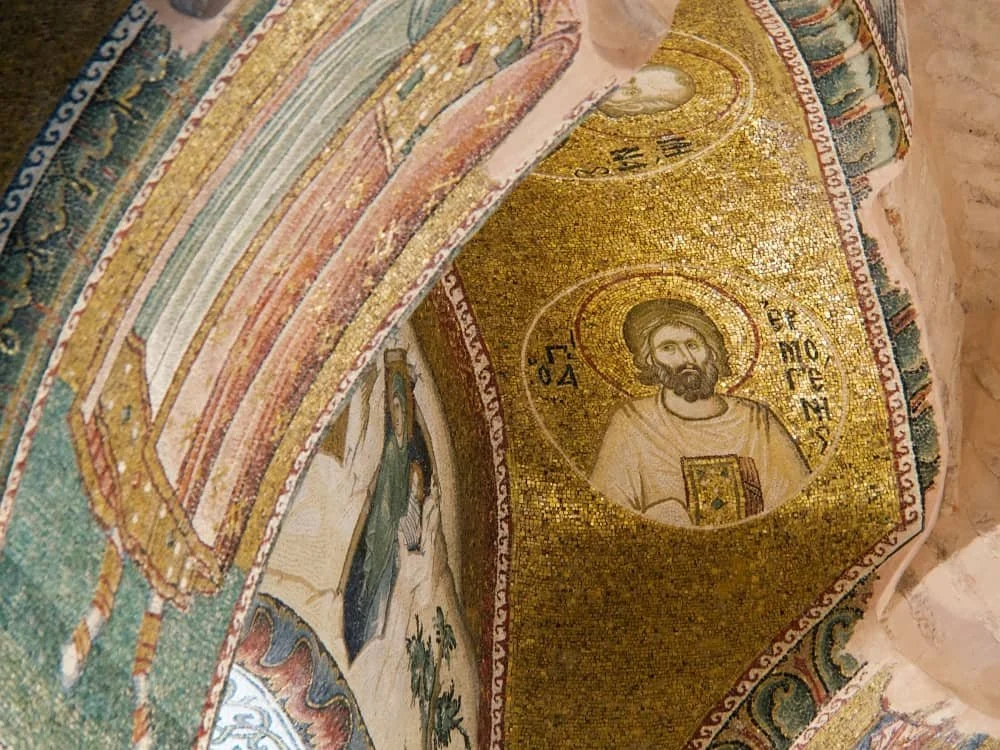
Chora’s Beginnings and The Missing Martyrs
Despite the walls and ceilings of Chora being absolutely jam-packed with religious imagery - including several busloads worth of saints - the two saints most commonly associated with the site's beginnings are completely absent. But they are still worth knowing about!
First up is St Babylas of Nicomedia (modern-day Izmit) - not to be confused with the other St Babylas of Antioch or St Babyliss who is the patron saint of hair styling products and who I just made up.
The site of Chora Church is said to have initially been set up as a necropolis for the relics of Babylas, an early Christian leader who was persecuted for his beliefs.
When he refused to denounce the things he believed, he was martyred by beheading, which you might have thought would be the end of it, decapitation being a fairly decisive conclusion to most arguments.
According to the story however, 84 of Babylas’ disciples decided to show support for the would-be saint by refusing to denounce what he had taught them. The result being that they were also given the chop.
When people said “heads will roll” back in the day they weren’t kidding around.
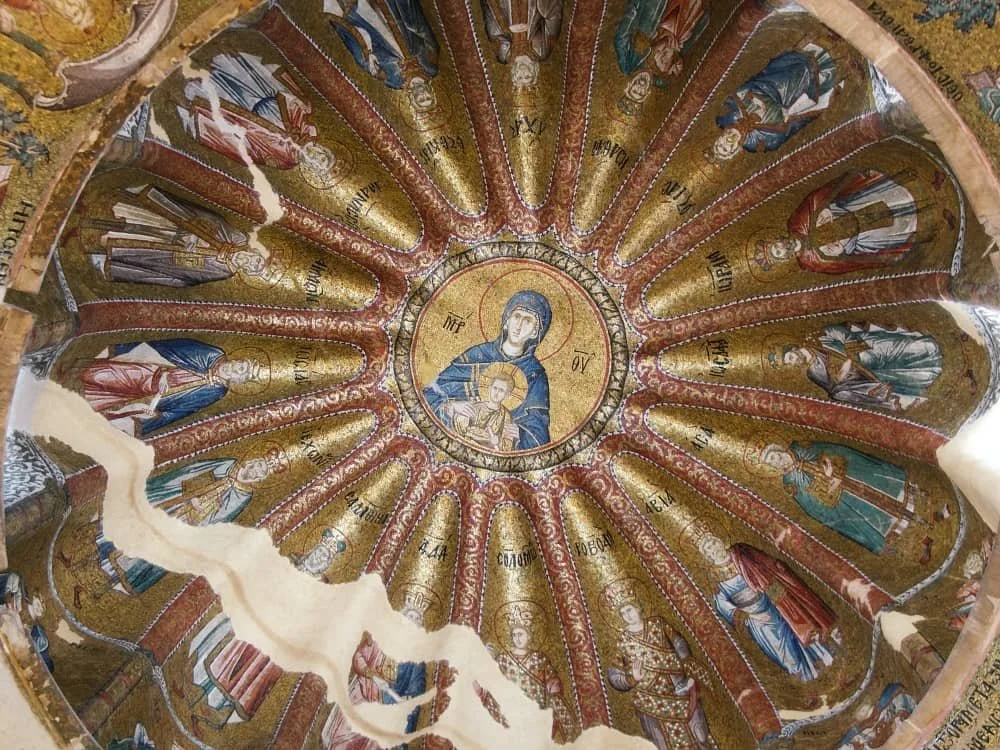
Mosaic of the Virgin Mary and Jesus Christ as a child surrounded by 16 ancestors from the House of David on the inner narthex dome
So, according to tradition, the site of Chora sits atop the relics and remains of Babylas and 84 of his disciples.
I like to think that back when I was a teacher I had a pretty good relationship with my students and yet I genuinely can't think of one that would have been willingly beheaded for me. Pfft...no loyalty nowadays. Bunch of lightweights.
Despite this being a foundational story of the Chora Church site, the fact that these remains would be many layers below the actual foundations (the relics would have been placed in the 4th century and the furthest down archeologists are currently able to get to is around the 6th century) means the story is both literally and metaphorically buried.
You won't find any references to Babylas at the site or paintings of him and his 84 mates, so maybe spare a thought for them when you're walking on their graves.
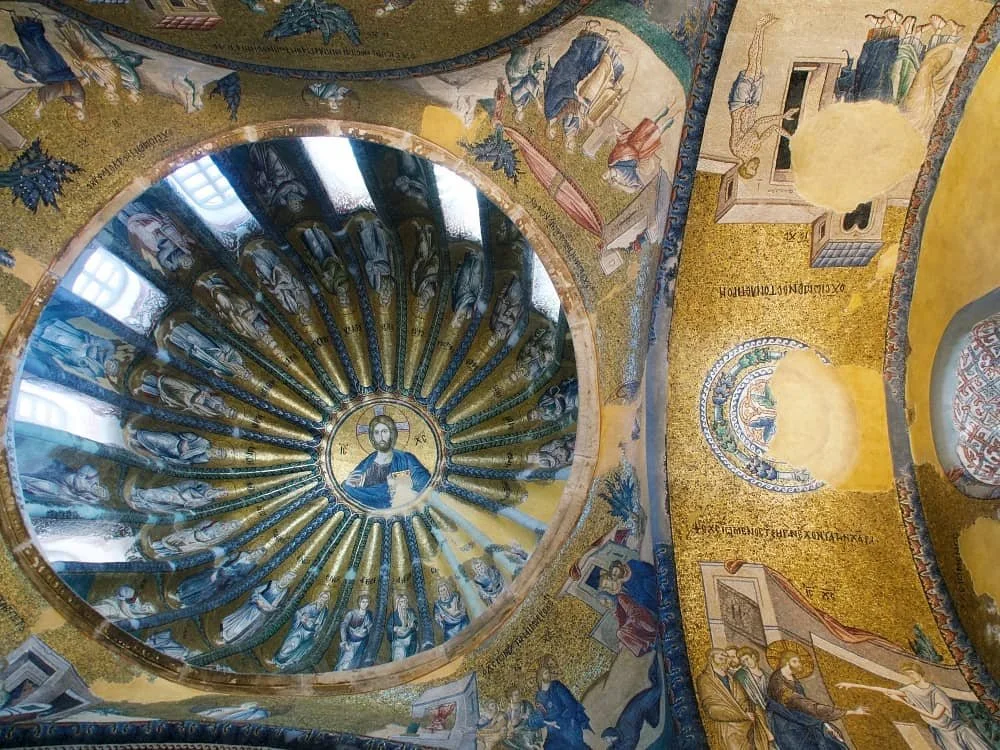
Theodore, Theodora and the Geese
To be fair, the lack of archeological evidence for the story isn't the only reason that Babylas doesn't get a shout out. It makes sense not to commit to one saint when there are other competing traditions.
That other tradition gives credit to Saint Theodore for having set up a monastery on the site in the 6th century, which was destroyed by an earthquake and then rebuilt by the Emperor Justinian.
Speaking of Justinian, the connection with purported Chora founder St Theodore doesn't end there. His wife, Empress Theodora was reportedly St Theodore’s niece, which might explain why he was so keen to help out with the rebuilding.
By the way, if you’ve never heard of Justinian (builder of the Hagia Sophia) and Theodora, Istanbul’s original power couple, I guarantee it's worth a minute of your time.
Just as a taster, it’s worth knowing that Theodora herself was the quintessential Julia Roberts in Pretty Woman rags-to-riches story.
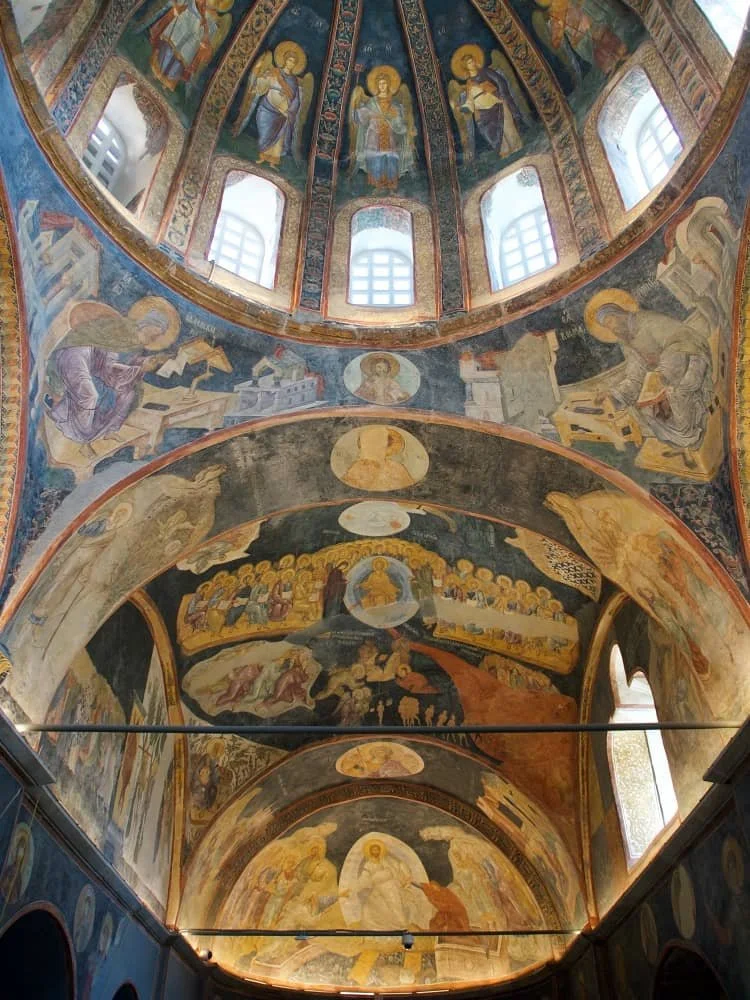
Frescoes in the funerary side-chapel of Chora Church
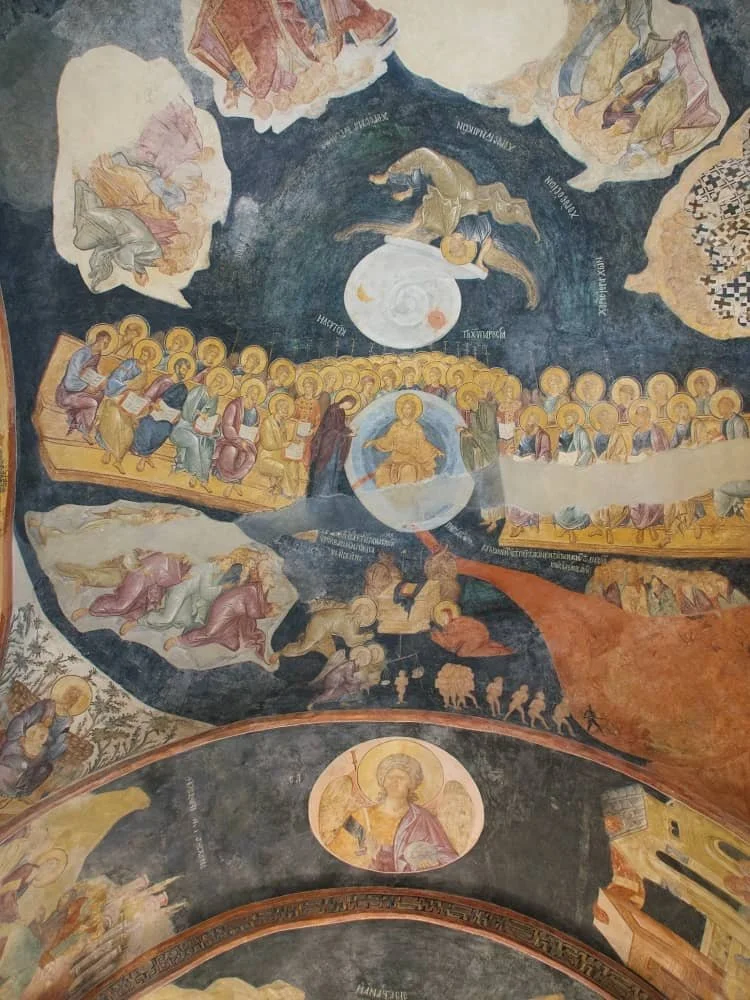
Frescoes depicting the Last Judgement
The daughter of a bear keeper (which is already an awesome job title) she was an actress and mime - which back in the day were common euphemisms for ‘Lady of the Night’.
Justinian though was besotted with her, and actually had laws changed so that he could marry her and make her Empress.
A fascinating character who reportedly hid Christian refugees of a different denominational flavour in rooms beneath the very palace where she stayed with Justinian, Theodora was also famed in her pre-empress days for her unusual party trick, which involved covering her naked body in barleycorn and letting geese eat it off.
Like I said, worth a minute.
But enough of things you can’t spot. Here are a few often-overlooked details you can look out for on your visit.
Theodore Metochites and His Massive Hat
When admiring the frescoes and mosaics, one detail to look out for is the presence of yet another Theodore - Theodore Metochites - and particularly his mega impressive headwear.
Theodore Metochites was considered to have been one of the main donors to the building and decoration of Chora Church, mostly because he intended to eventually be buried there. Which is why a lot of decoration focuses on death, judgement and resurrection.
Theodore himself was once a Byzantine prime minister and an exceptionally wealthy man, which in some ways makes him similar to the UK’s former leader Rishi Sunak. He was also a noted intellectual and polymath, so in other ways not like Rishi at all.
Having decided to go full baller on frescoes and mosaics, Theodore threw a big chunk of his famous wealth into Chora Church. So much so, that as the main patron, he got to have himself included in a mosaic with Christ where he can be seen holding a model of the church he helped build and decorate.
Look out for the little building he is presenting to Jesus - it's the building you're actually standing in at the time.
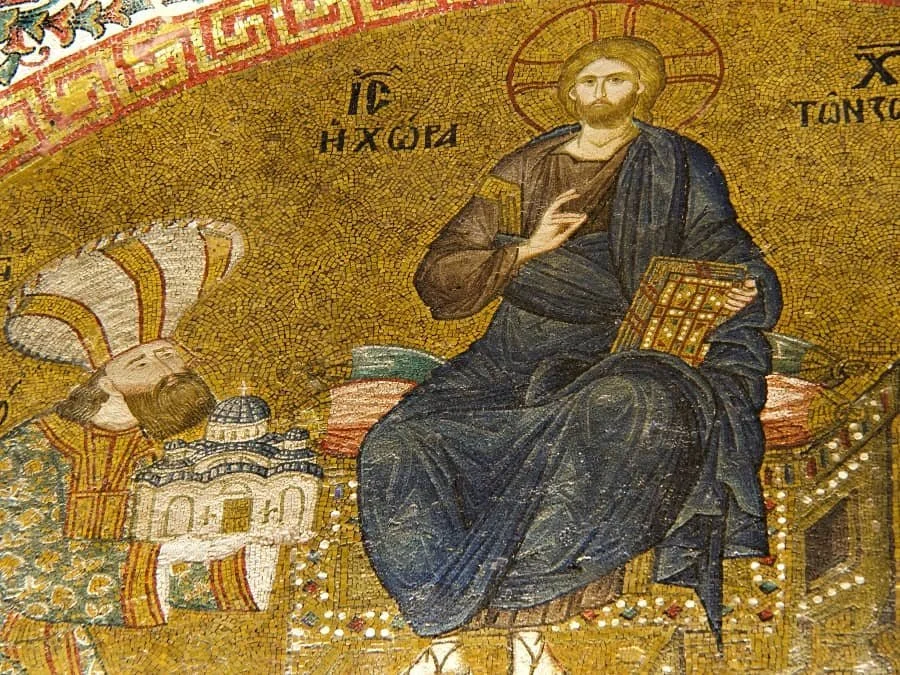
Theodore Metochites presenting the Chora Church to Jesus in the inner narthex entrance
Perhaps more notable, and definitely more noticeable than the mini building however, is Theodore’s far-from-mini headgear. Basically his MAHOOSIVE hat.
Apparently, in the Byzantine days things like status, intellect and the closeness of your relationship to the Emperor were communicated visually by the size of your ‘skiadion,’ a turban-like bit of headgear. The bigger the skid-lid the more important you were.
Keen to ensure that this point was not overlooked in the mosaic, Theodore ensured that his skiadion was so big that his head looks like the basket of a hot air balloon floating over the Chora Church he holds in his hands.
In an ironic twist, Theodore actually lost all his status and money (and presumably his hat) after a spectacular political fall from grace.
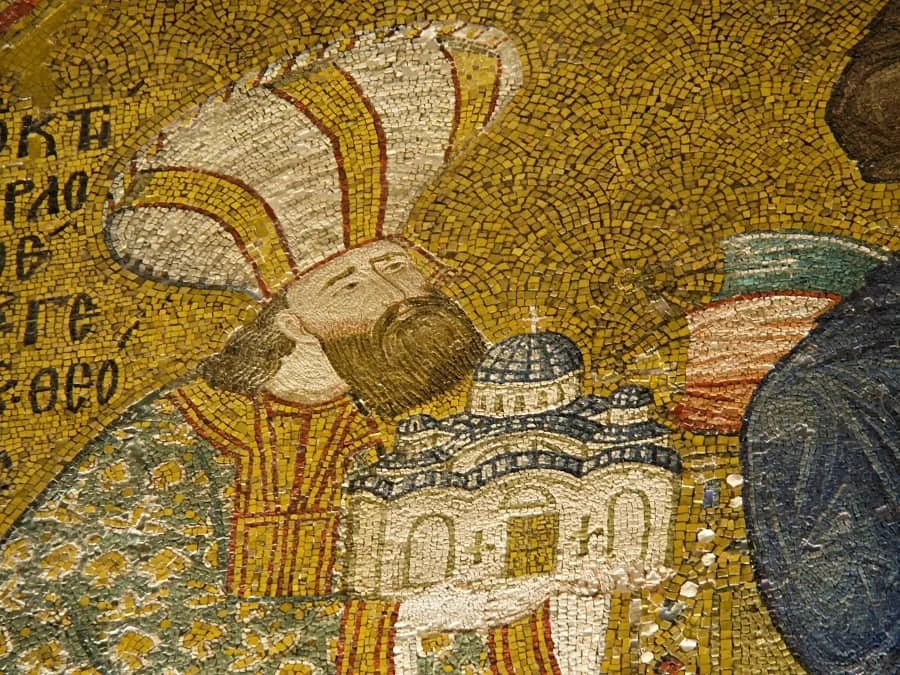
Now that’s what I call a HAT!
He did however return to Chora in his twilight years, where he took vows and became a monk. He also got his wish to be buried at the site he invested so much in and is actually beneath the big hat mosaic.
You can spot Theodore and his massive hat under the fresco of the resurrection, over the entrance to the naos (main nave).
The Life of the Virgin Mary: Cuddles and Flame-Throwing Privates
Whilst one section of the church deals with events and stories from the life of Christ, the inner narthex is dedicated to stories from the life of his Mother, the Virgin Mary.
This visual representation of events from Mary’s life acts almost like a giant graphic novel and is one of the most complete depictions of her life anywhere in the world.
What might strike some as odd about these depictions however, is how unfamiliar some of the stories are.
Indeed, what's interesting about these stories is that some might be unknown even to devout church-going Christians. As some guidebooks will tell you, this is because the stories are not actually from the Bible itself but from the apocrypha.
What this essentially means is that these tales of Mary’s early life come from the books that the powers-that-be in the Church did not think should be included in the official collection of books we now call the Bible.
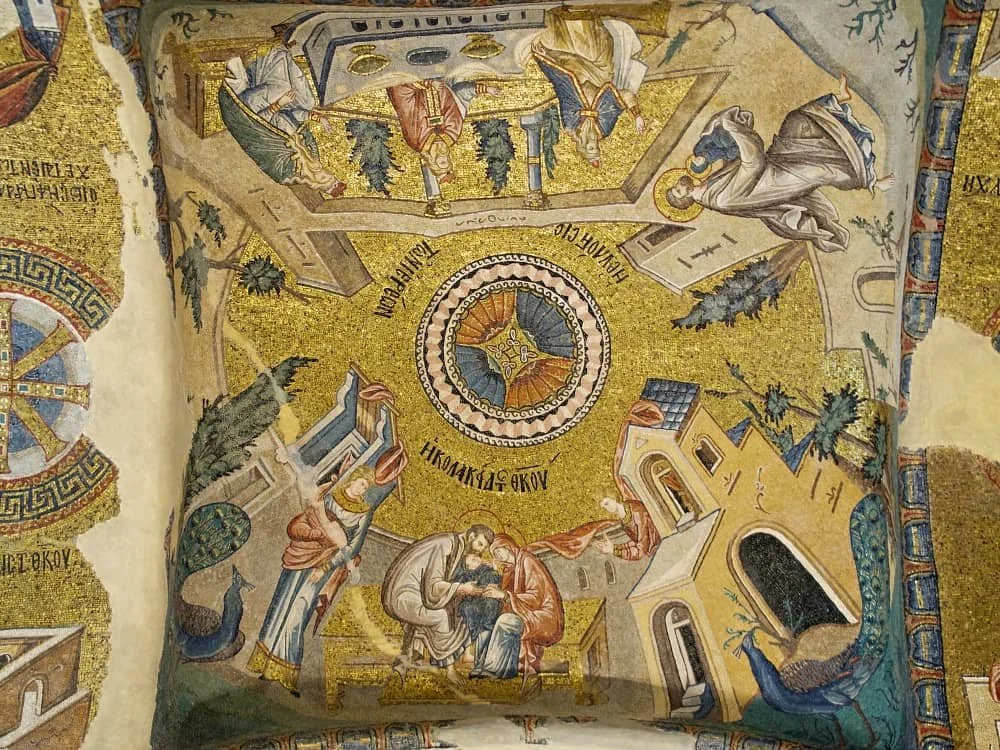
Mosaics showing the life of the Virgin Mary in the inner narthex of the Chora Church
Again as guidebooks will tell you, even though these stories and legends might not feature in the Bible itself, they would nonetheless have been familiar to Christians at the time that the artworks were being made.
What the guidebooks will not tell you, (but we will), is that the stories depicted here come mostly from a book called the Gospel of James and that this is the same Gospel of James that features a story of Mary’s flame-throwing private parts. No, really.
The story as told in the Gospel of James goes like this: a midwife doubted Mary’s virginity. Resolving to test the veracity of the claim, she decided to do so in what can only be described as a very ‘hands on’ way, by intrusively touching parts she shouldn't be touching.
The result? The midwife’s hand and arm were roasted by flames coming from a wholly (and holy) unexpected source.
Perhaps luckily, this particular story from the Gospel of James isn’t depicted on the walls.
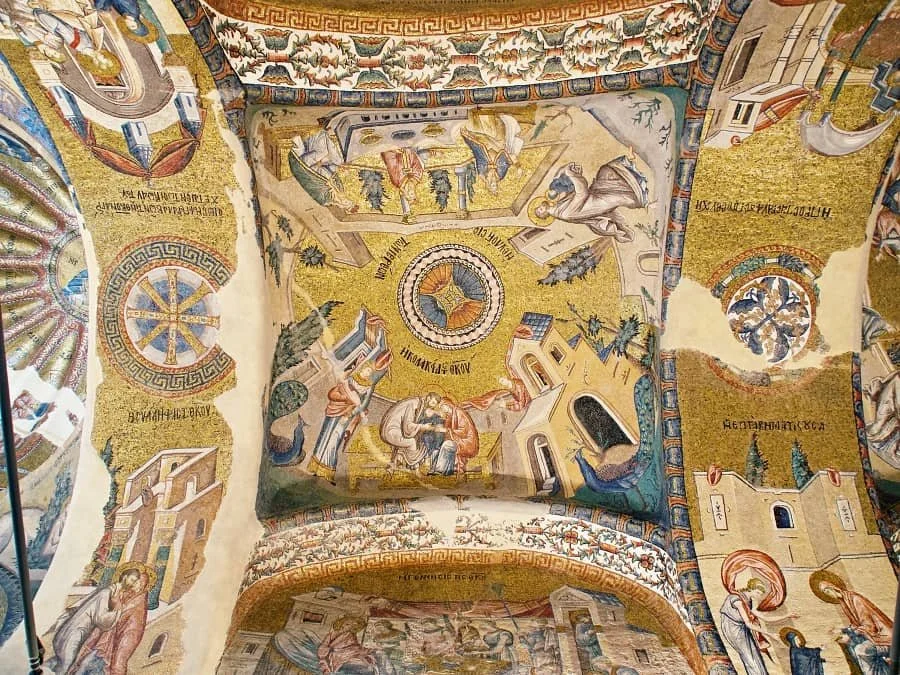
What you can look out for however, are specific details taken from other stories in the Gospel of James (which incidentally claimed to have been written by Jesus’s brother) that guidebooks often gloss over or miss entirely. Another reason why it's worth visiting with an actual guide.
What is striking about the stories depicted, other than their unfamiliarity, is the way in which they show a move away from idealised lofty and unattainable visions of the characters and instead show more grounded and human themes as well as depictions of emotion and tenderness.
This might not sound like much, but it's a big step forward in art and basically ushers in the ideas and styles that would define the Renaissance.
Good examples of this can be seen in the depictions of Mary’s first seven steps as she walks toward her mother Anne/Anna and particularly in the scene showing her receiving affection from her parents.
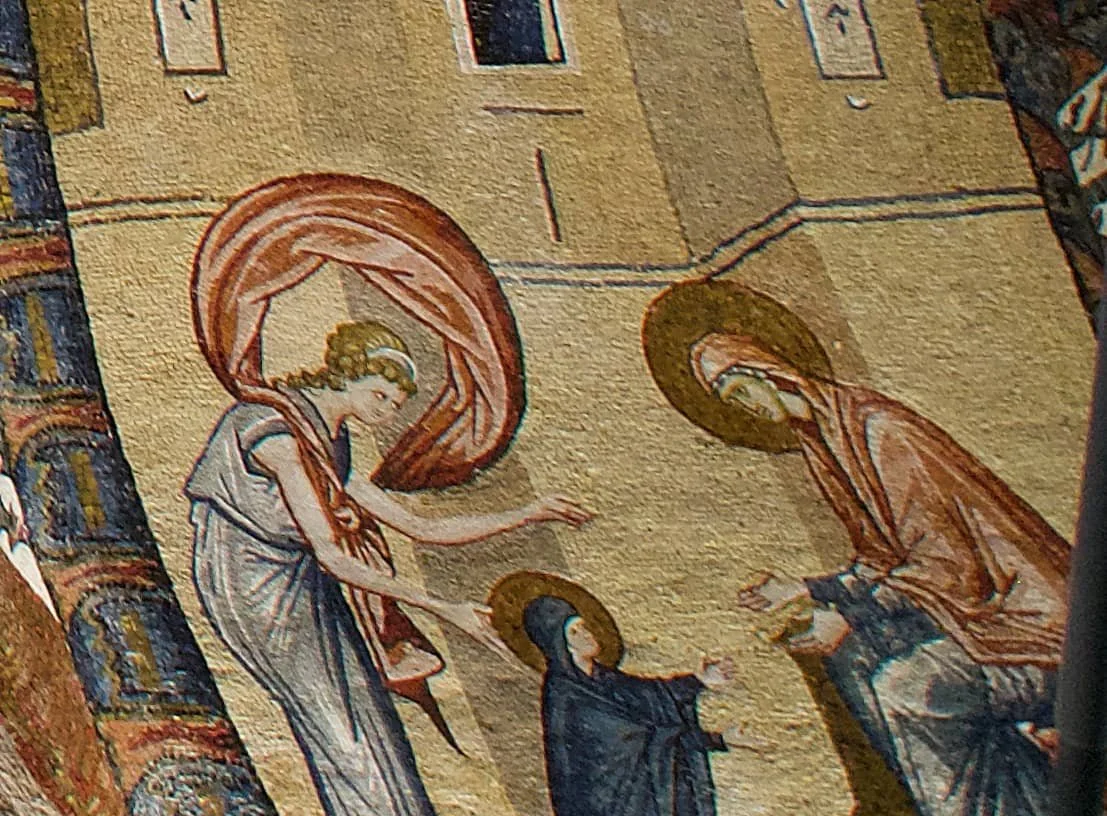
Mary’s first seven steps
Rather than being depicted as aloof interchangeable characters as they might have been in early Byzantine art, there seems to be genuine emotion captured here.
As well as being significant for its ‘depiction of late Byzantine humanism’ the cycle showing Mary receiving affection is really just a lovely image of a cuddle, as mother and father snuggle with their daughter.
It’s easily one of the cutest depictions of Mary and one of our favourite bits of Chora Church. See it’s not all death and flame-throwing you-know-whats!
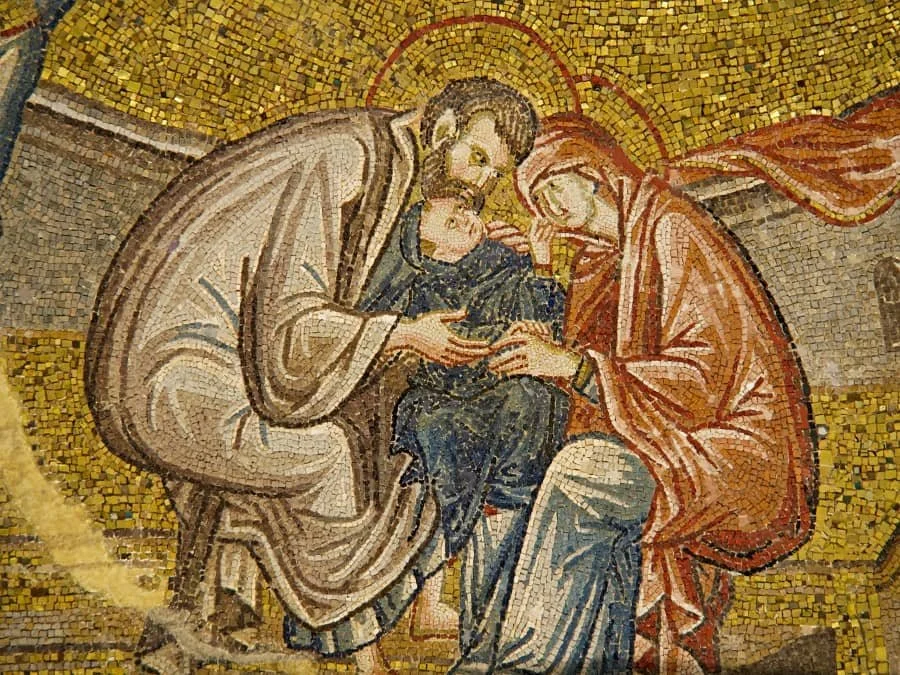
Cuddles with baby Mary!
Touching and Foreshadowing
Oddly, whilst this depiction is very touchy-feely, the touching has to stop after a while. In the panel showing Mary’s father presenting the baby Mary to the priests you should look out for his hands.
What you’ll notice is they are covered because he doesn't want to touch the sacred child with his bare hands.
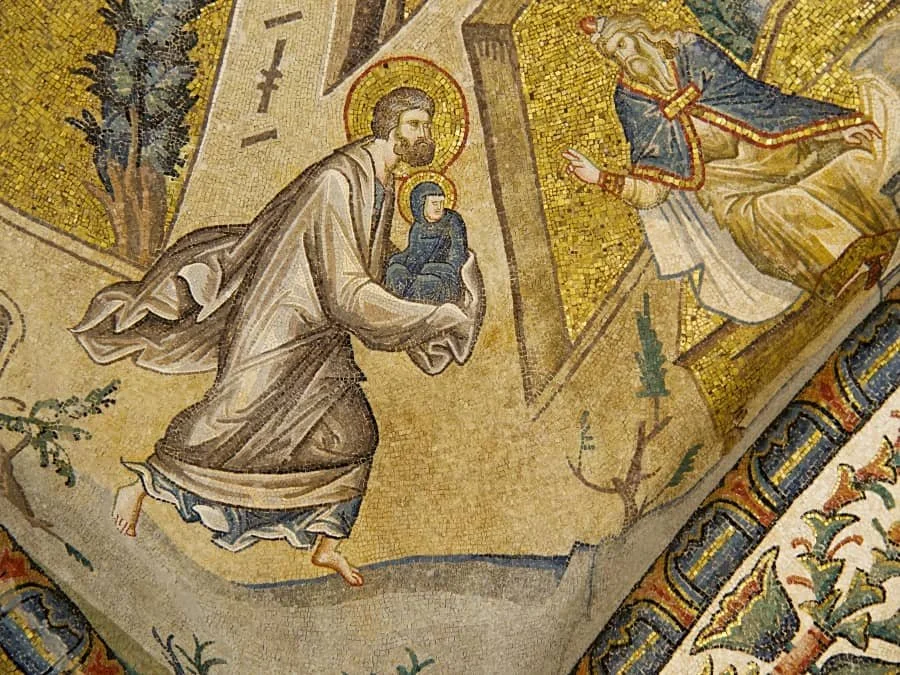
Mary’s father carrying Mary in his arms which are covered by his robe
The Purple Skein
Another detail to look out for include Mary receiving a purple skein. That’s skein, not skin, just in case you were getting excited by the thought of Mary looking like a Ribena berry.
You’ll notice this fresco because it basically looks like Mary has been shoved forward by her mates and a guy on a throne is handing her something that looks like a cross between a dead octopus and an old toupee.
What this odd looking wig is actually meant to be is a ball of purple wool. When the virgins in the temple are given wool to spin the temple veil, Mary’s wool (chosen randomly and significantly by lot) is purple.
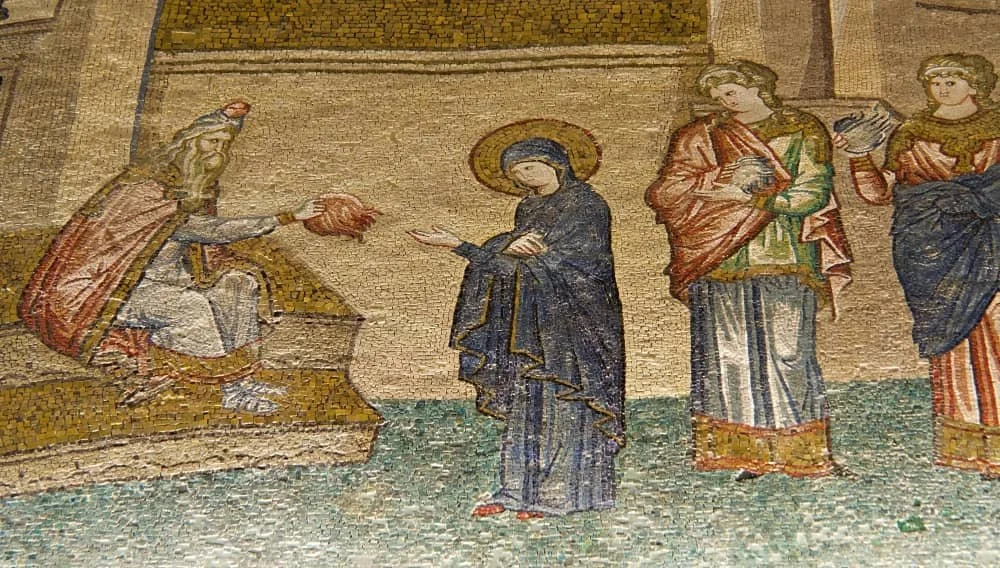
The mosaic of Mary being given the purple skein of wool in the inner narthex of Chora Church
This being a royal colour signifies that she is special and will birth a king. There is also heavy foreshadowing here of the fact that Jesus will be dressed in a purple imperial robe when mocked before his death and that the soldiers will cast lots for his clothes.
Joseph’s Rod and Other Sons
Another tiny but cool detail to look out for is in the panel showing Mary being entrusted to Joseph. In the previous panel Mary is selecting her prospective husband from 12 widowers. She does this by having the twelve suitors lay their rods out on the altar in front of her.
If you snickered at that last sentence then you should grow up, honestly.
Joseph is selected because his rod miraculously blooms, so the detail to look out for is the fresh blooms coming from the wooden staff being handed to him: the blooms look like leaves just above the hand.
This tiny detail is very symbolically significant. The new leaves and shoots coming from the top of the old wooden staff not only represent the miracle of his selection but also the new life that will come.
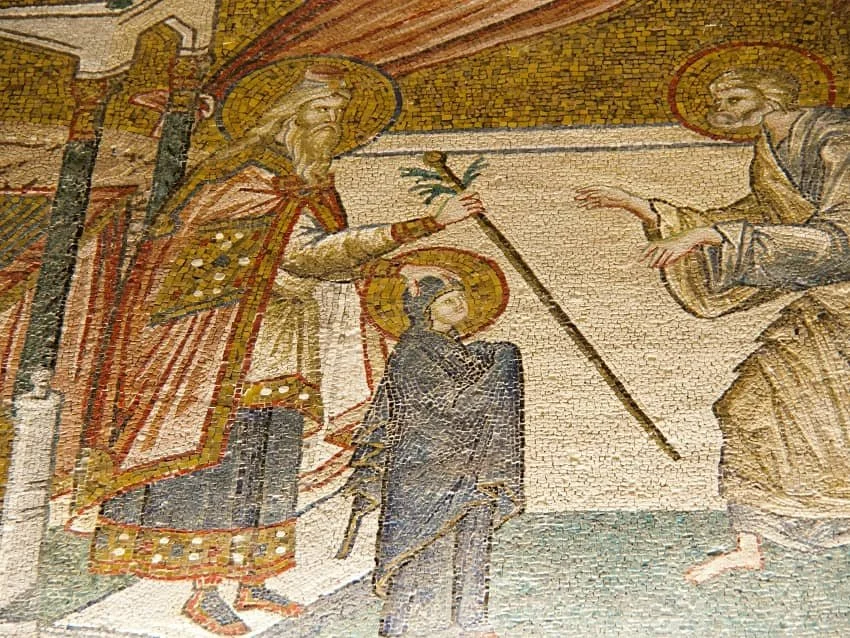
Joseph’s blooming rod
Speaking of Joseph, it’s also worth looking out for the image of him in the outer narthex which shows the Tax Enrolment before Governor Quirinius.
What is interesting about this mosaic is the four guys behind Joseph holding bundles. Why are they interesting? Well, because these are Jesus’ not often mentioned step brothers. Joseph’s sons by his marriage before Mary.
Before we leave the topic of Mary, there are a few other details relating to her that are worth looking out for in other parts of the building.
In the naos, the part of the building now used for Muslim prayer, there is a gorgeous depiction of the ‘Koimesis’ or ‘dormition’, essentially the last sleep before Mary ascends into heaven.
Worth noting here is that above where Mary is laid out on the bed. Jesus is standing. The detail to particularly notice is the fact that he is holding a baby.
Obviously, by the time Mary ascended, Jesus was himself already dead and ascended, so this is showing a spiritual rather than literal Christ. Meanwhile, the baby he is holding isn't a baby at all but Mary’s soul which Jesus is helping to heaven.
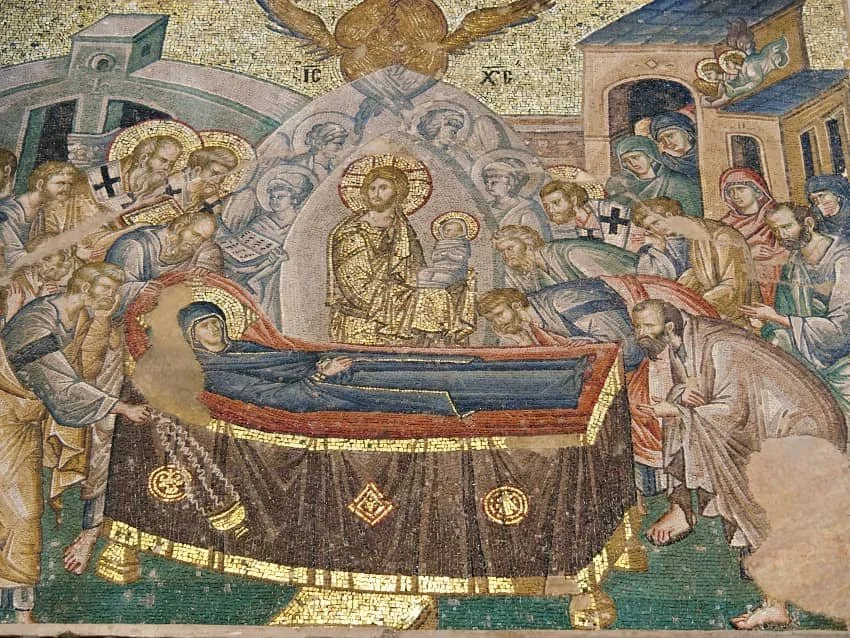
Dormition of the Mother of God in the naos of Chora Church
A totally non-religious detail to spot: I always find it funny to point out the guy at around 5 o’clock to the Mary soul baby.
For some reason, as all this cosmic wonderment is going on, he’s leaning over the bottom of the bed looking decidedly like he's just dropped his mobile and is fishing around trying to find it under the bed. There's always one isn't there?
Christ Pantocrator, Two Choras and the ‘Container of the Uncontainable’
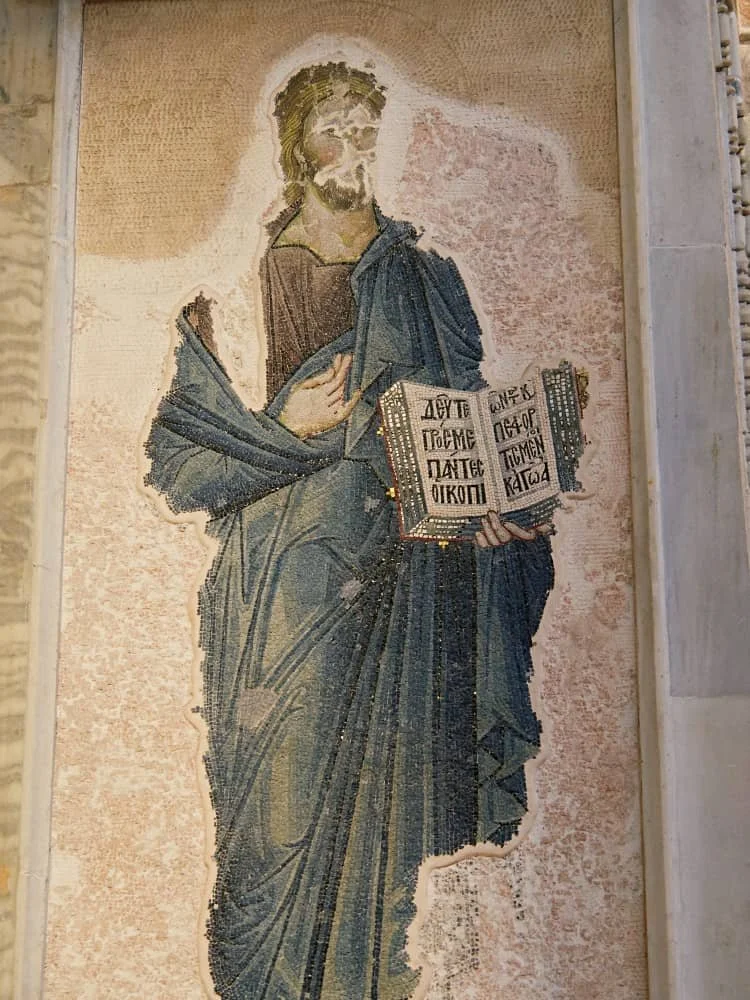
In a more religiously oriented detail, in the same naos area, Jesus is shown holding an open book. In case you were wondering, the message on the pages is Matthew 11:28 which reads:
“Come to me all you who are weary and burdened and I will give you rest”.
Another significant Mary-related image is the mosaic of her with the baby Christ in her womb in the outer narthex of the Chora Church. What is interesting about this depiction, other than it being a stunning mosaic, are the inscriptions, one of which describes Mary as ‘The Chora’.
This is a pun on the name of the church and ties that name - which you’ll remember refers to the fact that the church was ‘outside’ - to the idea of Mary as the ‘container of the uncontainable’.
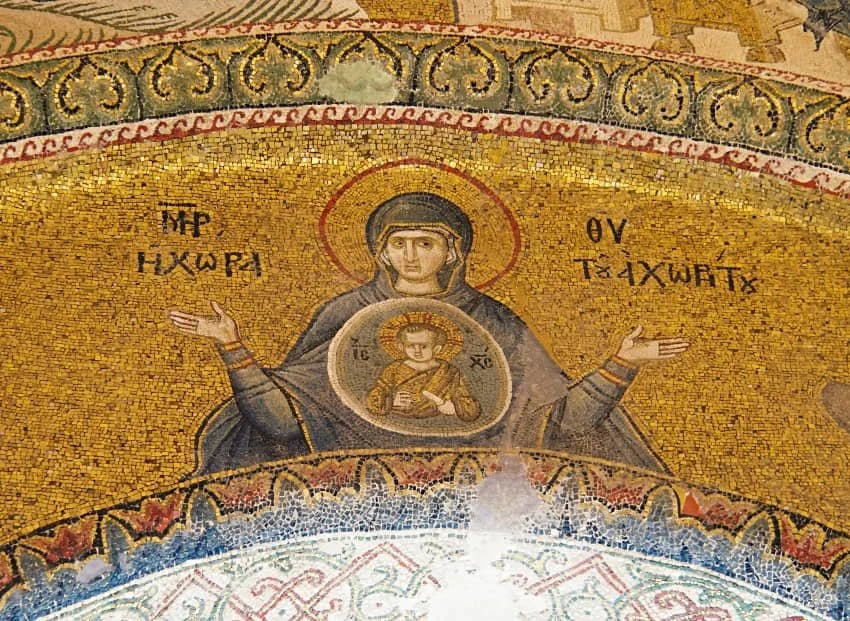
Mary with Jesus Christ in her womb in the Chora Church’s outer narthex
The Most Famous Mosaic of Jesus Christ Pantocrator
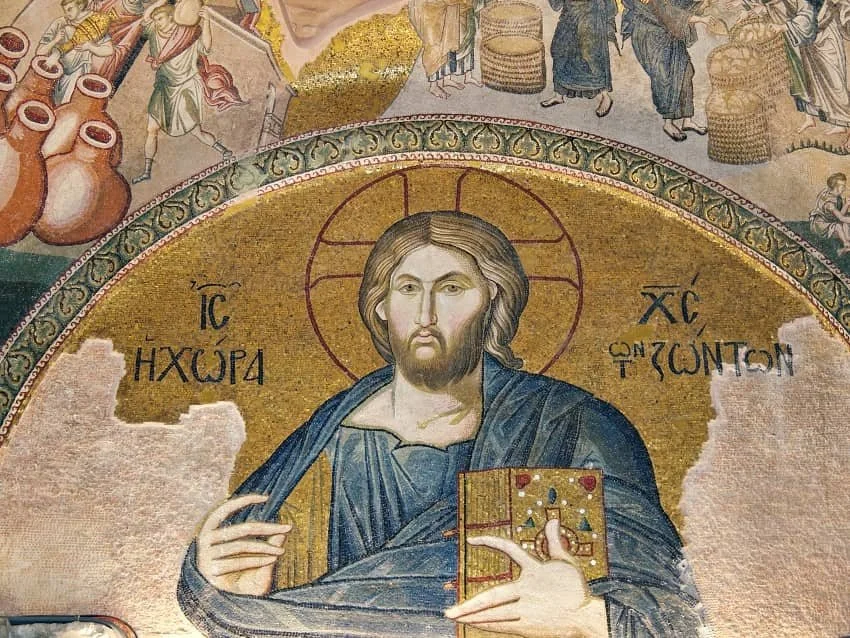
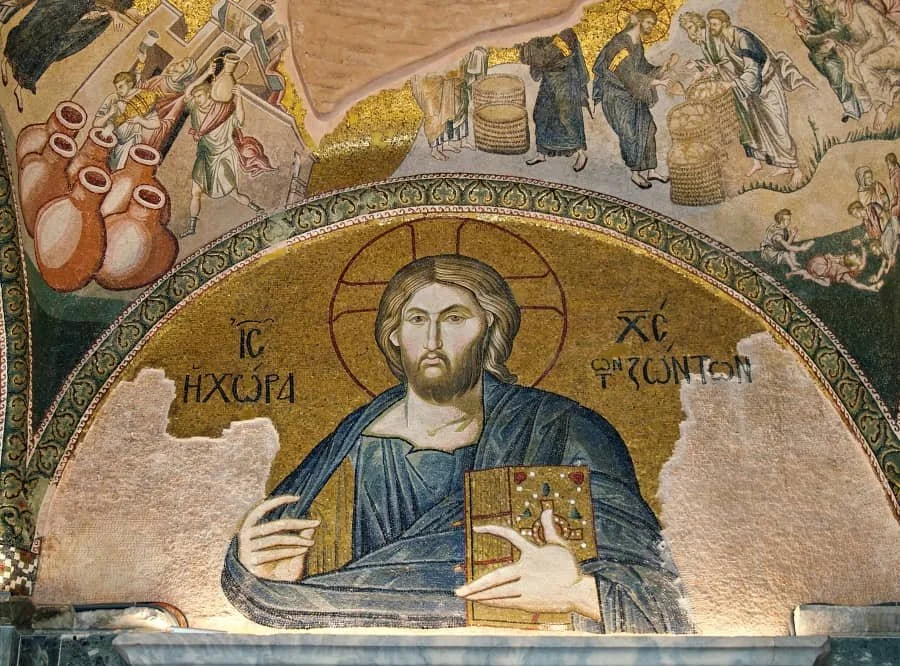
In the same area as the depiction of the ‘Chora Mary’ is the most famous mosaic of Jesus Christ Pantocrator. This mosaic is perhaps the most recognisable at Chora and the one that finds its way into most guidebooks, tourist information guides and fridge magnets.
This is not surprising, since it is a beautiful piece of work. This piece also has a pun on the word Chora as it describes Christ as the Chora or ‘land of the living’.
The often missed details about this particular mosaic however, relate to its realism.
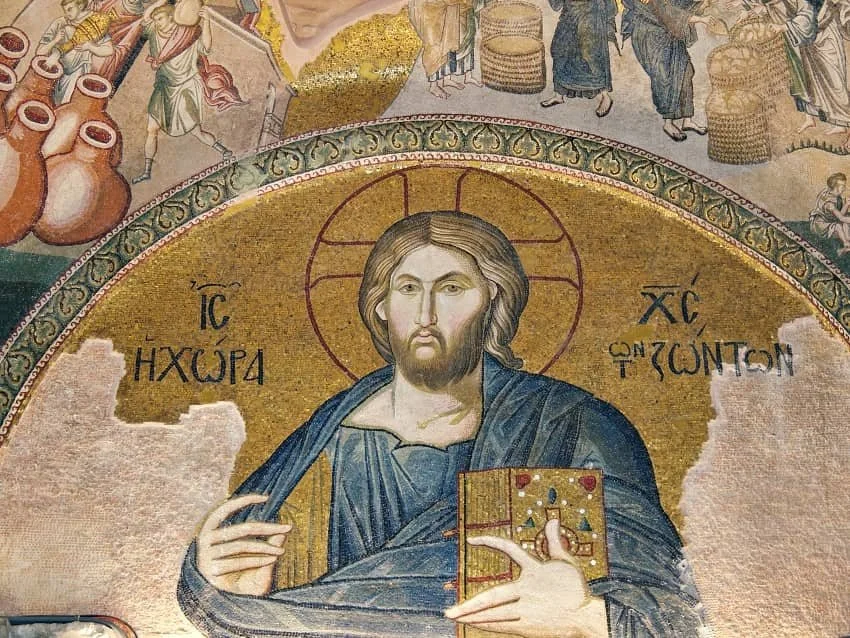
Jesus Christ Pantocrator in the outer narthex of the Chora Church
An example of this is the fact that his ears aren't level (the right ear is lower than his left).
This detail, which would have made it difficult for Jesus to wear glasses, is not an accident but is actually intended to suggest depth, rounding and perspective in the image as well as making the subject look more real.
Rather than being an idealised and perfect image of Christ there are some subtle details that make him seem more real and fleshly. The other thing to notice is that the mosaic is an example of the gaze effect, meaning that the eyes have been rendered in such a way that they follow you wherever you go.
Realism and Rival Gods?
A final fascinating and often missed little nugget is in the ‘enrolment for taxation’ and ‘wedding at Cana’ cycles.
Aside from grounded details of a man arguing with one of the bureaucratic census takers (red tape was a thing even then it seems) whilst another struggles with the straps of his Roman sandals - both details that add to the realism of the images - the real star here is the man slaying the bull.
What is fascinating about the slaying of this bull is not so much that he is doing it, but the way he’s doing it. The pose, the exact posture, the style of his tunic, even the gushing blood is almost identical to depictions of the pagan god Mithras slaying the bull.
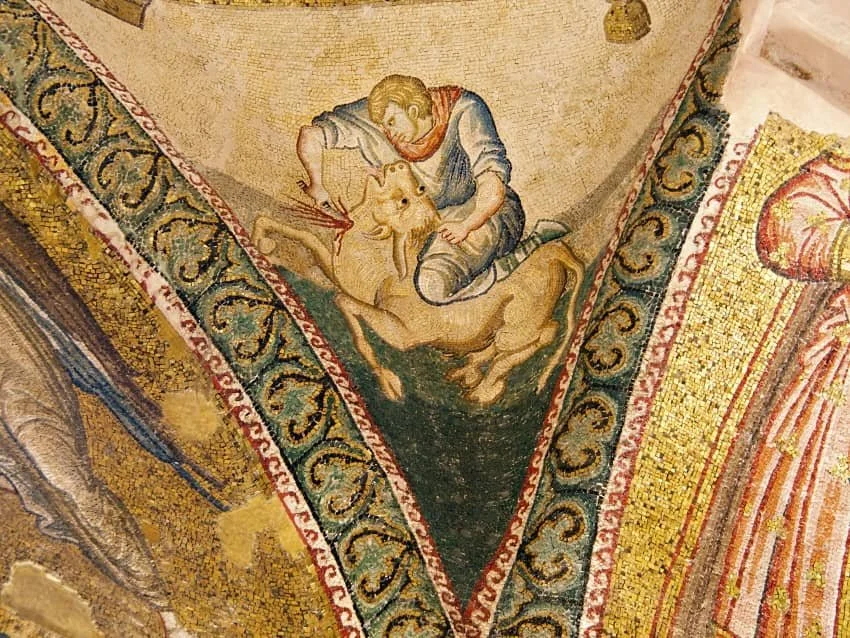
A mosaic of a man slaying a bull in the outer narthex of the Chora Church
Mithras or Mithra was a popular god and actually a rival belief system to early Christianity. Archeological remains of temples dedicated to him can be found all over Europe and the Levant.
Whilst some might say that this is a coincidence, the depiction is so similar to other representations of Mithras that it's basically the equivalent of finding a depiction of the crucifixion in the religious building of another faith.
Before we start getting all Dan Brown about things and suggesting this was a subversive inclusion put there by a surviving cult of Mithras worshippers, it's worth having a bit of a reality check.
By the time the mosaics and frescoes at Chora were made, the Mithras cult had been extinct for nearly a millennium (allegedly, duhn duhn duhhhn).
The more likely explanations are that there was just a sort of visual shorthand for how you depict certain things and that this was passed down over generations. Nothing to do with Mithras.
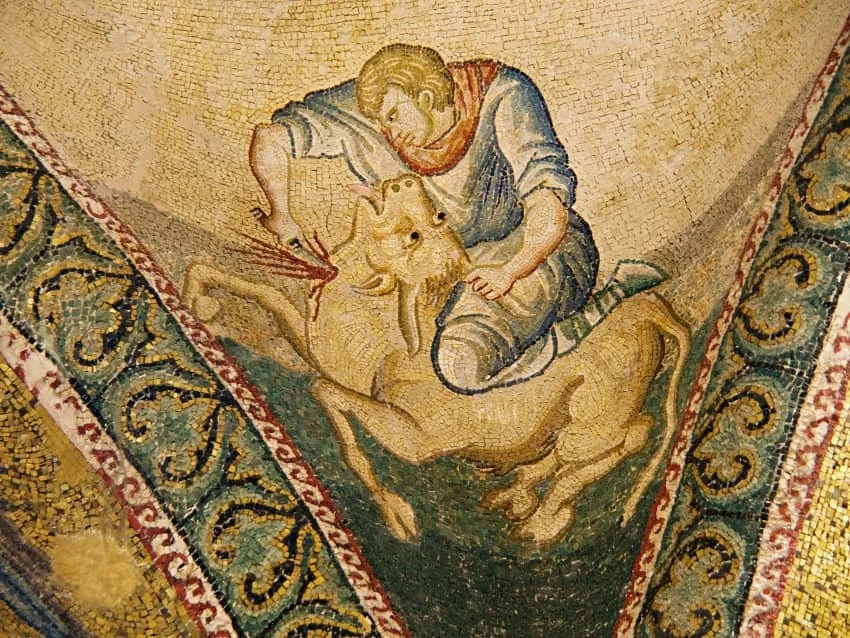
Alternatively, the artist knew damn well that this was how Mithras was depicted and they deliberately included the detail to demote the so-called god to a servant’s role, demonstrating Christian superiority over pagan ideas.
Either way, worth pointing out, no?
There are tons and tons of other small details easily overlooked on a visit to Chora and whilst we could spend another few thousand words going over them, this isn't meant to be a guide book and we don't want you visiting the place only to have your eyes glued to a screen.
Where is Chora Church and How Do I Get There?
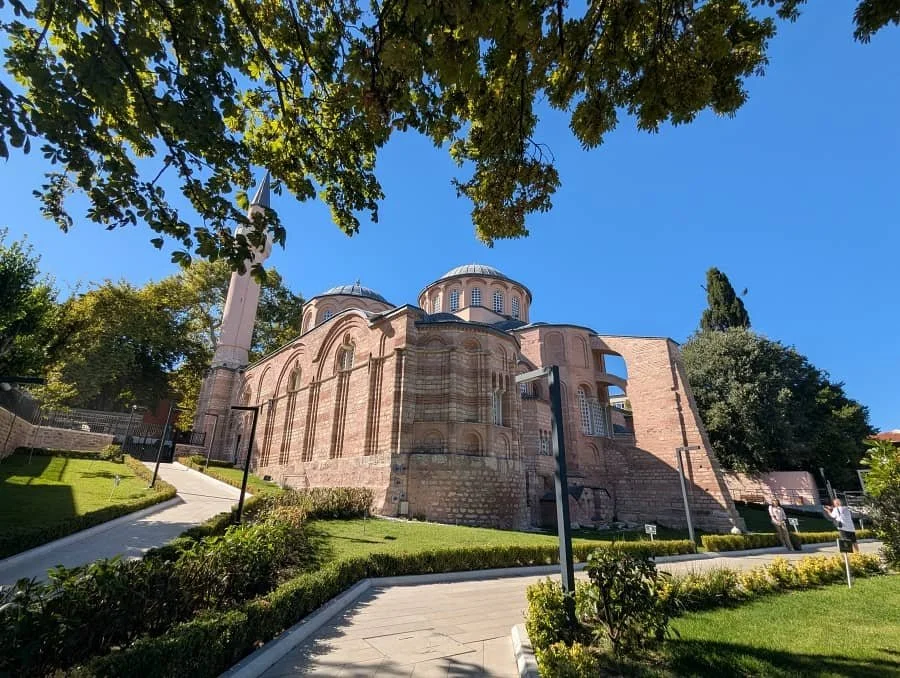
Chora Church is located in Edirnekapı.
You can get there by taxi, but if you’d rather save some pennies and see a bit of the city on the way, the church is easily reachable by public transport from most of the main tourist areas.
From Taksim
You can take the 87 bus to Chora Church from the Taksim Tünel bus stop located in the underpass beneath Taksım.
Get off at the Edirnekapı stop - you can ask the driver to let you know when you’ve reached it but the buses have electronic displays onboard that show the stops as well. Alternatively keep tabs with Google maps as you go.
From the bus stop it's around a 300 metre walk to Chora Church, which is clearly signposted.
You can also take the M2 metro line from Taksim station to Vezneciler station and walk 2 minutes to the Şehzadebaşı bus stop.
You can then take buses 36V, 38B, 50V or 86V to the Edirnekapı stop. This might sound more convoluted but it can sometimes be quicker depending on the traffic around the Golden Horn.
From Sultanahmet
If you are coming from Sultanahmet, jump on the T1 Tram toward Kabataş and get off at Eminönü station. Walk a minute or two to the main bus terminal and take buses 31E, 36KE or 50P to Edirnekapı.
Alternatively, if you want to stay on the tram network and not switch to buses, ride the T1 to Topkapı, then switch to the T4 tram line to Edirnekapi.
The nearest tram stop to the site is the Edirnekapı T4 tram stop which is about 15 minutes walk from the church and linked to much of the rest of the public transport network.
Note: You will need an Istanbulkart to take these public transport routes.
Know Before You Go: Opening Times, Dress Code & Photography
Opening Times
Chora Church is open from 9:00am.to 6:00pm with last admittance at 5:30pm.
The site is closed to tourists on a Friday due to Friday prayers, so make sure not to plan your visit for that day. On other days, admittance for tourists is paused for fifteen minutes before prayer time to allow worshippers to enter and pray uninterrupted.
Entrance Fee
Turkish citizens and Muslim foreigners visiting for worship can enter the site for free. Turkish residence permit holders can also visit free of charge.
There is an entrance fee of €20 for foreign visitors which goes towards conservation of the site. You can buy tickets in advance here from the official seller DEMS Museums or from the ticket booth at the church. There are also audio guides available in several languages.
Museum cards are not accepted at the site.
Inside the site there are boards with QR codes that offer information about the different rooms and frescoes.
Dress Code
A few practical tips and things to be aware of before visiting Chora Church.
It’s important to remember that Kariye is a working mosque and as such there are certain expectations in regards to modesty and behaviour.
As you would probably expect when visiting a place of worship there are also a few dress code expectations. You cannot enter whilst wearing shorts so make sure your legs are covered.
Ladies will be expected to wear a headscarf in the naos (the area used for Muslim prayer), inner narthex and annex areas, though to be honest it’s probably easier to just keep your hair covered the whole time. Scarves are available at the entrance.
It is also worth noting that at times, the frescoes in the naos are covered with curtains to respect rules around having images of humans in a mosque.
These works are sometimes uncovered, as they were when we last visited, but just be aware that they might not be depending upon when you choose to visit.
Photography
You can take photos, but flash photography, commercial photography and lighting equipment are prohibited.
Prohibited items
There is a security checkpoint at the entrance and a list of things you should not bring into the church which includes food and drink, spray paints, inks and some more obvious prohibited items like weapons. (You don't need to be carrying weapons on the visit. Period).
If you’re travelling with young children, please note that strollers are not allowed inside Chora Church.
Luggage of any size is also prohibited, so don’t plan your visit on your way to the airport with all your cases in tow.
If it’s throwing it down outside, be prepared to leave your umbrella at the entrance because they are not allowed inside either.
Ready to Visit Chora Church?
And there you have it, all the information you might need to visit one of Istanbul’s most fascinating historical sites.
Chora Church is one of those places where there's always something else to notice, whether it's a large hat, flowering rods or a pagan-like image you didn’t expect to find. Take your time, look up and don't be afraid to linger a little longer than planned. It's well worth it.

Useful Resources For Your Trip
🛬 Need accommodation in Istanbul?
🛬 Need an airport transfer?
🌟 Don't Forget:
- Save money with a Wise International Debit Card.
- Get travel medical insurance with SafetyWing.
Before you go, make sure to check out some of our other Istanbul and Turkey/Türkiye guides:
🗓️ The Best 1 Day in Istanbul Itinerary
🏠 Best Areas to Stay in Istanbul: Coolest Neighbourhoods & Top Hotels
🛌 Where to Stay in Cappadocia: Best Areas, Hotels & Top Tips
🛫 How to Get from Istanbul Airport to the City Centre
✈️ How to Get from Sultanahmet to Istanbul Airport
❌ Istanbul Travel Mistakes to Avoid
🗓 The Ultimate Turkey Itinerary 10 Days
🏖️ Where to Stay in Izmir: Best Izmir Districts, Top Hotels + Useful Tips
🕌 Things to Do in Mardin: Turkey’s City of Golden Stone
🇹🇷 The Best Places to Visit in Turkey
🌷 Visit the Istanbul Tulip Festival
🎪 18 Best Festivals in Istanbul
🚂 Sirkeci Station: Discover Istanbul's Orient Express Station
🍴 A Foodie’s Guide to the Best Mardin Restaurants
🍯 Where to Find the Best Baklava in Istanbul
🏔 Cappadocia in Winter: 7 Reasons to Visit + 16 Amazing Things to Do
🏞️ Zelve Open Air Museum Cappadocia: A Complete Guide
🎄 Christmas in Istanbul: All You Need to Know for a Magical Stay
⛄ 9 Awesome Reasons to Spend Winter in Istanbul
🍳 Best Breakfast in Istanbul - 16 Incredible Places to Try
✅ 12 Things You Need To Do in Istanbul
✈️ How to Get From SAW Airport to Istanbul City Center
🔎 Explore Balat Istanbul: An Insider's Guide to One of Istanbul's Most Unique Neighbourhoods
🍟 Best Vegan Fast Food in Istanbul
🥑 Where to Find the Best Vegan Turkish Breakfast in Istanbul
🖼️ 14 Top Things To Do in Gaziantep
🍔 Off the Eaten Track: The Best Street Food in Istanbul
🥦 Vegan Istanbul: The Best Under-the-Radar Restaurants
Find more travel tips and useful information on Turkey here.
Looking for more travel inspiration? Click here to discover more of our favourite places around the world.e world.
Some of the links in this guide to Chora Church are affiliate links.
That means that if you drop any ca$h monies on any products after clicking one of these links (i.e. make a purchase), we will earn a small commission at no extra cost to you. This enables us to MAKE IT RAIN, BABY, (nah just kidding, we actually use it to buy coffee which we drink whilst creating more useful and entertaining content like this).
Mog and Dog Travels is a participant in the Amazon Services LLC Associates Program. As an Amazon Associate I earn from qualifying purchases.
Don’t worry, we only link to places that we really like and products that we actually own or would buy for ourselves.


Planning Istanbul? Discover what to book in advance, including Hagia Sophia, Topkapi Palace and top tours. Avoid queues and learn how to secure tickets before you arrive.